Wallpaper or Paint for a Feature Wall: How to Decide
The right answer depends on the pattern you want, the wall you actually have, and how much wear it will see.
October 19, 2026 · 4 min read
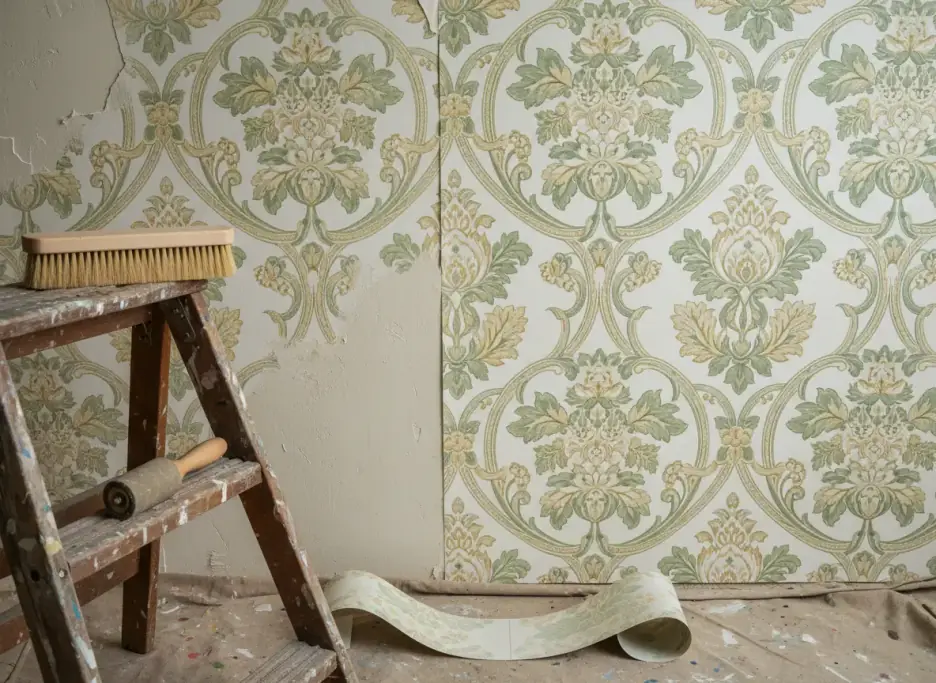
A single wall that does something different from the rest of the room is one of the oldest tricks in decorating. It still works. The question is what the wall should do, and whether that means paint, wallpaper or another kind of wall covering.
Walldecor offers both painting and wall covering, so here is a plain guide to making the call, and what a wall needs underneath before a covering goes on.
When does paint make more sense?
Paint is the better choice when the idea is color, mood or contrast, and when you may want to change your mind later. A deep color behind a bed, a dark wall in a dining room, a bold shade in a stairwell: all of these work as paint, and all of them can be repainted if tastes shift.
Paint also suits walls with a lot going on. A wall with windows, radiators, wide trim, a fireplace or built-ins breaks up a large pattern. Paint gives you the color without asking the pattern to cut around all of that.
Finally, paint is the more flexible option when the surface is uneven. Older plaster has waves, patches and texture. A flat or eggshell finish forgives a lot of it. Wallpaper, in contrast, tends to show surface problems unless the wall is made smooth first.
When is wallpaper the better choice?
Wallpaper does things paint cannot. It brings pattern, texture, scale and material: a damask, a grasscloth, a botanical, a geometric, a textured vinyl. If the wall is meant to be the thing people look at, wallpaper often wins.
- A pattern or motif is the point of the wall.
- You want texture or a woven look that paint cannot imitate.
- The wall is a clean, uninterrupted run, like behind a headboard, a sofa or a dining table.
- You want visual interest in a room where color alone would feel flat.
Scale matters. A large pattern needs room to breathe, and a small pattern can feel busy across a big wall. If you are unsure, hold a large sample against the wall and step back across the room before deciding.
What does wall covering need from the wall underneath?
This is the part that gets overlooked and decides the result. Wall covering is only as good as the surface it sits on. A paper can look crisp on installation day and show every flaw a few weeks later if the wall was not ready.
- Smooth: bumps, ridges, drips and roller texture can telegraph through, especially with lighter or thinner papers.
- Clean and dry: dust, grease and moisture all prevent a good bond.
- Sound: cracks, loose plaster and flaking paint need repair first, or the covering can lift with them.
- Sealed or primed: bare plaster or patched areas generally need a primer or sealer so the surface absorbs evenly and the paper can be adjusted and later removed.
- Free of gloss: slick old paint may need to be sanded or primed so the adhesive can grip.
Preparing a wall is painter's work. Walldecor's published prep plan includes thorough sanding of all surfaces, the same habit that gets a wall ready for paper.
Moisture deserves its own mention. Kitchens, baths and entries are the hard places. Steam and splashes can lift seams on some papers. In those rooms, ask about wipeable or vinyl coverings and make sure the room is well ventilated. If you see staining, bubbling or peeling already, deal with the cause first, because covering a damp wall only hides the problem.
How do you care for different wall coverings?
Care depends on the material, so keep the information that comes with the covering and ask the installer what applies to yours. As a general guide:
- Vinyl and vinyl-coated papers are the most durable. They usually tolerate a gentle wipe with a damp sponge and mild soap.
- Non-woven papers are sturdy and breathe well. Light dusting and spot cleaning with a barely damp cloth is typical.
- Traditional paper and printed damasks are more delicate. Dust gently, and avoid water on the surface unless the maker says it is safe.
- Natural materials like grasscloth are textured and can stain or mark. Soft brush or vacuum dusting is usual, and spills are best blotted quickly and not rubbed.
Whatever you choose, test any cleaner on a hidden spot first, and keep a spare roll or an offcut if you can. A leftover piece makes any future repair far easier to match.
Can you combine paint and paper?
Often the best answer is both. A papered feature wall with the other three walls painted in a color pulled from the pattern ties the room together. Trim in a slightly shinier sheen frames it. The painted walls give the eye somewhere to rest, so the paper does not have to do all the work.
Choose the paint after you have the paper in hand. Match a background tone in the pattern for a quiet look, or an accent tone for something livelier, and check both together in the room's light.
A simple way to decide
- Ask what the wall is for: color, pattern, texture or calm.
- Look at the surface honestly. If it is rough, cracked or damp, fix that first.
- Think about wear. Busy areas favor tougher, wipeable options.
- Consider how long you want to live with it, and how easy a change would be.
- Look at samples on the wall, in your light.
If you are weighing paint against wall covering, Walldecor's wall covering page lays out what the work involves, or call (773) 960-2273 to talk it over with the crew.
Walldecor Incorporated, (773) 960-2273
Call (773) 960-2273More articles
Choosing Paint Sheen Room by Room in an Older Chicago Home
Sheen decides how a wall looks in afternoon light, how it handles a wet cloth, and how much of its history it shows.
Getting a Room Ready for Painters: What the Crew Does and What You Should Do
A good prep day splits cleanly between what the crew does and what only you can decide.