Getting a Room Ready for Painters: What the Crew Does and What You Should Do
A good prep day splits cleanly between what the crew does and what only you can decide.
October 19, 2026 · 4 min read
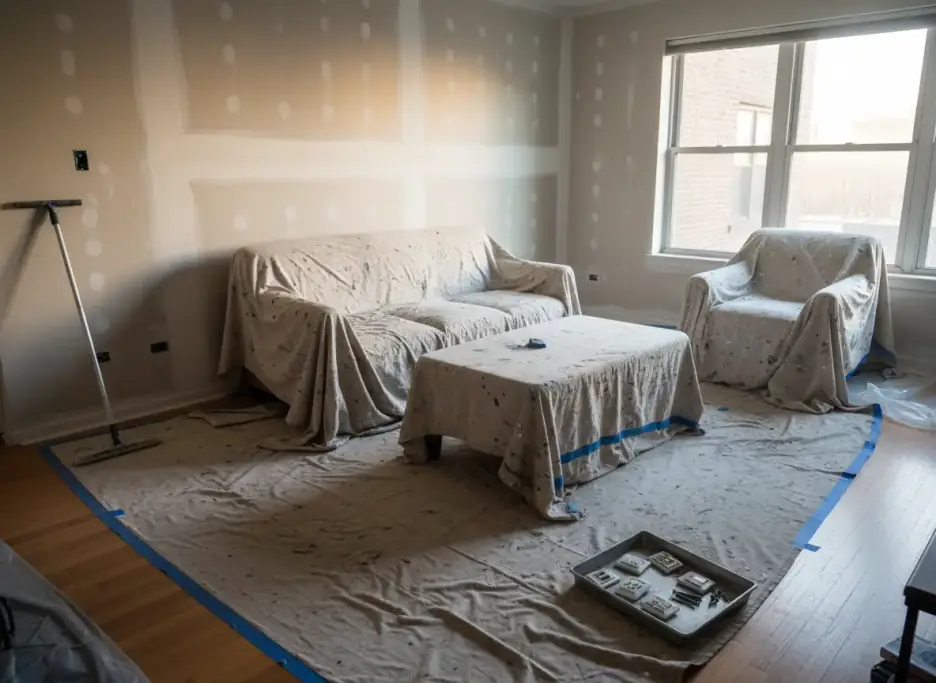
The first coat of paint is the part everyone pictures. The work that decides how the job looks happens before it. Sanding, patching, protecting the floors and moving the furniture are the quiet hours that make a finish look clean instead of rushed.
Walldecor publishes its residential prep plan, and it is a good outline of what you can expect from a careful crew. Below is what that prep covers, and then the short list of things that are worth handling yourself so nothing slows the day down.
What does the crew handle?
Based on Walldecor's published prep plan, these jobs belong to the painters, not to you.
- Thorough sanding of all surfaces, so the new paint has something to grip and old drips, ridges and rough spots do not show through.
- Moving the furniture, so walls and trim can be reached and nothing sits in the way of the work.
- Removing and replacing switch plates and fixtures, so paint goes up to the edges cleanly instead of being cut around hardware.
- Drop cloths over floors and belongings, so splatter and dust land on cloth and not on your hardwood or your sofa.
- A choice of high-quality low-VOC paints, so you can pick a product that suits the room and your household.
- Full clean-up and a walkthrough at the end, so you see the finished work with the crew before they leave.
That list is worth reading closely, because it describes work you should not be doing the night before. Do not try to sand the walls yourself or pull fixtures. Leave those to the people who will be putting everything back and answering for the result.
Why does sanding matter so much?
Paint sticks to a surface that has a little tooth. Glossy old paint, a patched crack or a drip from a previous job will all show up through a new coat if they are left alone. Sanding levels those spots and dulls the old surface so the new coat bonds properly.
In older Chicago homes with plaster walls and layers of previous paint, this step takes real time. It is also the step that is easiest to skip and hardest to notice until a month later, when the finish starts to look uneven. If a crew tells you sanding is part of the plan, that is a good sign.
What is worth doing yourself?
Even with a full-service crew, a handful of things only you can do. None of them are heavy lifting. They are mostly about decisions and access.
- Put away valuables and breakables. Jewelry, small electronics, fragile ornaments and anything sentimental are best out of the room and out of the way.
- Clear what is inside furniture that will be moved. Dressers and shelves are easier and safer to shift when the contents are not rattling around.
- Plan for pets. Dogs and cats and wet paint do not mix. Decide where they will stay on painting days.
- Sort out access. Tell the crew how to get in, where to park, which entrance to use and whether there are building rules in a condo or a multi-unit property.
- Finish the decisions. Color, sheen and which surfaces get painted should be settled before the day, not during it.
Wall art and rugs are a good question to ask the crew directly. Some homeowners prefer to take down their own pictures and mirrors, especially anything valuable or fragile. Others are happy to have the crew handle it. Rugs are often rolled or covered. Settle it in the same conversation as the schedule so nobody guesses.
How should you plan your day around the work?
Painting is quieter than most trades, but it is not invisible. You will have people in the house, furniture in the wrong places, and some smell, even with low-VOC paint. Low-VOC products generally have a milder odor than traditional ones, but they still need fresh air while they dry, so open windows when the weather allows and ask the crew how they handle ventilation.
If you work from home, ask which rooms will be painted first and if you can keep one room clear. If you have young children, ask which areas should be off limits until the paint has dried. For landlords and property managers, give tenants a clear notice of the schedule, access and any rooms that will be out of use.
What happens at the end?
The last step of Walldecor's published plan is a full clean-up and a walkthrough at completion. Do not skip the walkthrough. Walk the rooms with the crew in good light, look at the edges, corners and trim, and point out anything you want touched up. It is much easier to fix a spot while the crew is still on site.
Take a moment to look at each room from a few angles, with the lights both on and off if you can. Daylight from a window shows flaws that overhead lighting hides, and the other way round. A thorough walkthrough takes a few minutes and saves a second visit.
A quick list for the night before
- Valuables and breakables put away.
- Furniture contents cleared where they might shift.
- Pets planned for.
- Entry, parking and building access confirmed.
- Color and sheen decisions final.
- Questions about wall art, rugs and ventilation answered.
If you want to see how a job runs from first visit to final walkthrough, Walldecor's interior painting page explains the process, or call (773) 960-2273 to talk through your project. Walldecor's hours are Monday to Friday, 8 to 5, and Saturday, 8 to 2.
Walldecor Incorporated, (773) 960-2273
Call (773) 960-2273More articles
Choosing Paint Sheen Room by Room in an Older Chicago Home
Sheen decides how a wall looks in afternoon light, how it handles a wet cloth, and how much of its history it shows.
Wallpaper or Paint for a Feature Wall: How to Decide
The right answer depends on the pattern you want, the wall you actually have, and how much wear it will see.