Exterior Painting in Chicago: Weather, Wear and When to Repaint
Exterior paint has a hard job here, and knowing where it fails first helps you plan before the damage spreads.
October 19, 2026 · 4 min read
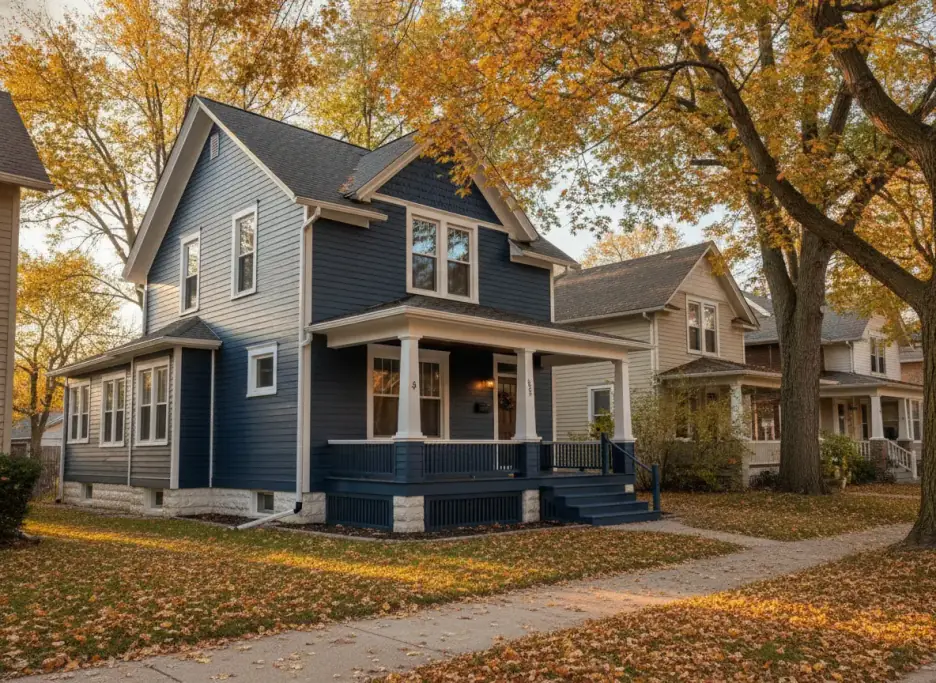
A painted exterior in Chicago works through a lot. Cold, wet winters, freezing and thawing again and again, then humid, sun-baked summers. Wind, rain and snow pile on, and the paint has to keep water out of wood and masonry through all of it.
Here is how that climate wears on a paint job, which parts of a building tend to go first, how to read the warning signs, and how to plan the work around dry weather. This is general craft, not a rulebook. For the specifics of your building and your schedule, ask the crew.
How does Chicago weather wear on paint?
Water is the main enemy. It gets into small cracks, hairline gaps at joints, and bare spots where paint has already worn thin. In winter that water freezes and expands, widening the gap. When it thaws, more water gets in. Repeat that over many cold seasons and small flaws turn into peeling, cracking and rot.
Summer does its own damage. Strong sun breaks down the binder in paint, which fades the color and leaves a powdery surface. Humid weather encourages mildew on shaded, damp surfaces. Temperature swings make wood and paint expand and contract at different rates, which stresses the bond between them.
Which sides of the building weather fastest?
Not every wall ages evenly. Each face takes a different beating.
- South and west faces get the strongest sun, so they tend to fade, chalk and crack first.
- North faces stay shaded and damp longer, which favors mildew and slower drying after rain.
- Faces that take prevailing wind and driving rain can show wear around windows and joints sooner.
- Horizontal and low surfaces like sills, porch rails, steps and the bottoms of doors hold water, so they often fail before the walls do.
- Areas below roof edges, near downspouts or where snow piles up take extra moisture.
When you walk around your building, check each face and compare. Often one side looks ready for paint years before the rest. A crew can paint the whole exterior at once, or plan around the faces that need it most. Ask which makes sense.
What are the signs it is time to repaint?
Paint rarely fails all at once. It gives warnings. Catching them early costs less than waiting for the wood underneath to suffer.
- Peeling or flaking: paint is lifting from the surface, often a sign that moisture got in behind it.
- Chalking: rub your hand across the wall. If a chalky powder comes off, the binder is breaking down.
- Cracking or alligatoring: fine cracks or a scaly pattern show the paint has lost flexibility.
- Bare wood: especially at sills, trim and the lower edges of siding, bare wood soaks up water fast.
- Fading and uneven color: not urgent on its own, but a sign the paint is aging.
- Mildew: dark or greenish patches, usually on shaded faces, that return after cleaning.
- Gaps in caulk: dried, cracked or missing caulk at windows, doors and trim lets water in.
Soft or spongy wood is a different level of concern. Press gently with a screwdriver tip on a sill or trim edge. If it sinks in, the wood is damaged, and it needs repair or replacement before any paint goes on. Fresh paint over rotten wood is a short lived fix.
What does proper exterior prep involve?
The same principle applies outdoors as in. The new coat is only as good as what is underneath. Loose and flaking paint needs scraping and sanding back to a sound edge. Dirt, mildew and chalk should be washed off so the new paint can bond. Bare wood is typically primed, gaps are caulked, and damaged boards are repaired.
That is a lot of work before the first coat, and it is where a good exterior job separates from a quick one. A crew that spends time on it is giving the paint its best chance in a hard climate.
When is the right time to paint?
Paint needs the surface to be dry, and it needs time to dry afterward. Rain, heavy dew, high humidity and very cold conditions can all interfere. The label on the can lists the conditions its maker recommends, and a crew with experience reads the forecast and the surface together.
What this means for you is that exterior painting is planned around weather, not the calendar alone. Schedules can shift when it rains, and a good crew will tell you so and rebook the days instead of painting wet. Ask the crew how they handle weather delays, what conditions they like to see, and how they will communicate if the schedule moves. Those answers depend on the crew and the job, so ask when you call.
How can you plan a smooth exterior project?
- Walk the building and note what you see on each face, with photos if you like.
- Check the wood at sills, trim and porches with gentle pressure.
- Ask the crew about repairs, prep and how they handle weather delays.
- Settle colors early, and look at them on the building in daylight.
- Move anything that sits against the walls, like planters, furniture and bikes, before work begins.
- Plan for access to ladders, gates, yards and parking.
If you are looking at your building and wondering how much life is left in the paint, Walldecor's exterior painting page explains how a job runs, or call (773) 960-2273 to talk with the crew about your walls, your trim and your timing.
Walldecor Incorporated, (773) 960-2273
Call (773) 960-2273More articles
Choosing Paint Sheen Room by Room in an Older Chicago Home
Sheen decides how a wall looks in afternoon light, how it handles a wet cloth, and how much of its history it shows.
Getting a Room Ready for Painters: What the Crew Does and What You Should Do
A good prep day splits cleanly between what the crew does and what only you can decide.